The expat vs immigrant debate is one I’ve been reading online for years and one that is always interesting to read various takes on, as it turns out people have so many interpretations of the two terms and how, or rather WHO, they should be applied to.
Disclaimer: All views are of my own accord.
While I’ve had my own thoughts on this topic, this blog post is particularly inspired by a comment I received on a video I filmed about Living in Qatar, where I mentioned that Qataris make up about 11% of the population, while the rest consists of immigrants and expats:
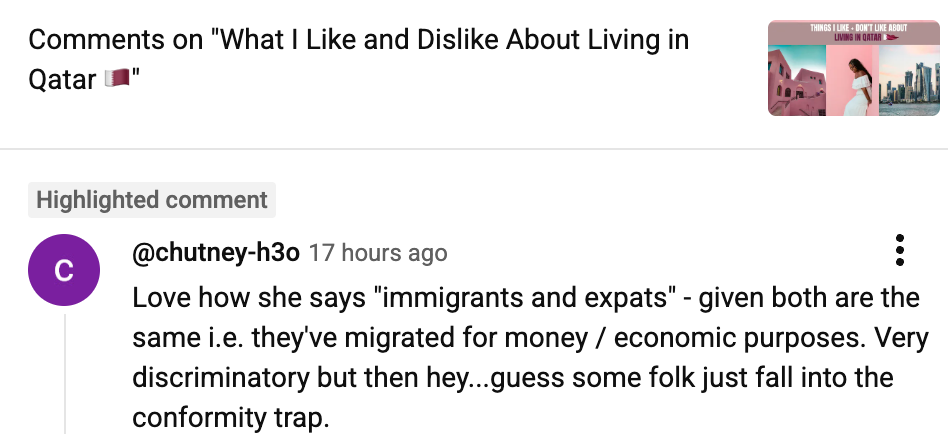
My response?
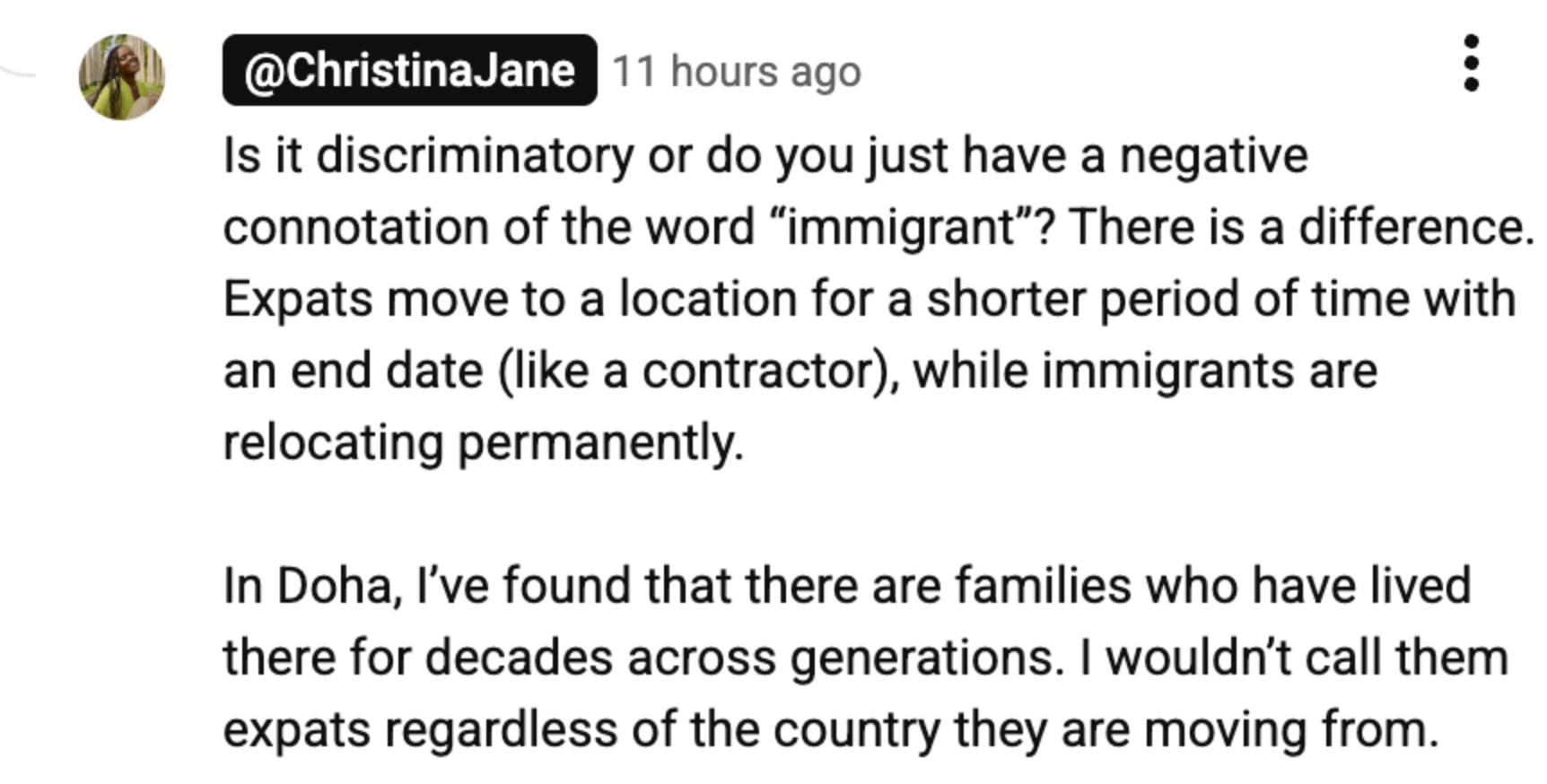
This comment stood out to me because Qatar, like many Gulf countries, has a population made up largely of both expats and immigrants, including families who have lived there for generations. Yet this person found it offensive that I used the term “immigrant,” even though, given their long-term status in the country, it was the term I felt was most appropriate.
To me, the two terms have more to do with how long someone plans to stay in a country and their intention for moving, rather than where they are from or what nationality they hold.
If you are permanently relocating to another country, you would be classified as an immigrant. If you are planning to work, study, or participate in a program in which you will be in a country for a specific length of time and you have an end date, you are best described as an expat.
As the daughter of two Haitian immigrants, I am no stranger to the negative connotations that surround the word “immigrant”, and it seems that now more than ever, referring to someone as an immigrant is immediately deemed as offensive or derogatory.
Let’s be real: being called an immigrant, especially in today’s climate, can be sensitive. With heightened focus on ICE, deportations, and immigration enforcement in general, the label often comes with immediate scrutiny about legal status, visas, and belonging, along with very real and blatant discrimination.

This is something I’m no stranger to, having grown up in an immigrant household in the U.S., where these questions and assumptions were a recurring part of my life.
This comment was interesting to me because it highlights the current immigration climate worldwide, where immigrants are often villainized, scrutinized, or marginalized. It also underscores how the term “expat” is applied unevenly.
I won’t pretend the word “expat” isn’t sometimes used to avoid “immigrant,” especially by Westerners uncomfortable with the stigma the term carries in their home countries.
That said, while it’s often suggested that “expat” is used to dress things up, I think in many cases it’s actually the correct term to use especially for those who are digital nomads, international teachers, and others on fixed-term assignments while living abroad and don’t see themselves as permanently relocating, but are rather living abroad for a specific period of time.

On the other hand, I’ve seen the opposite where people have been living in a country for years and years at a time yet still cling onto the expat label.
Where you are from, your race, nationality, etc. should have nothing to do with the label you receive as an expat or immigrant.
As I mentioned to this individual, if you too have complex feelings surrounding the world “immigrant” and feel uncomfortable with the label, I would encourage you to dig deep and reflect on why you may be uncomfortable with being called an immigrant, especially if you yourself have permanently relocated to another country, and explore some of your own negative feelings toward the term based on how society treats immigrants.